

Official websites use .gov
A
.gov
website belongs to an official government organization in the
United States.

Secure .gov websites use HTTPS
A
lock
(
) or
https://
means you’ve safely connected to the .gov website. Share sensitive
information only on official, secure websites.

 Data Briefs
Access and Use of Electronic Health Information by Individuals with Cancer: 2020-2022
No. 73 | August 2024

In 2024, an estimated 2 million new cases of cancer will be diagnosed in the US (1). As of January 2022, there were an estimated 18.1 million cancer survivors in the US, which is projected to increase to 22.5 million by 2032 (1). For cancer survivors and those managing a recent diagnosis, having access to online medical records via patient portals or smartphone-based health apps is critical to managing complex health needs such as viewing lab results or clinical notes, communicating with providers, and sharing information with caregivers and other providers involved in their care. In early 2024, as part of the Cancer Moonshot initiative, the White House reaffirmed their commitment to enhancing patient navigation in cancer care (2). Ensuring patients and caregivers have easy access to information they need to manage their health and care is critical to enabling patients to navigate a recent cancer diagnosis or cancer survivorship. This brief pools data from two years of the National Cancer Institute’s nationally representative Health Information National Trends Survey (HINTS) to examine the access and use of health information by individuals with cancer in 2020-2022.
Highlights
- More than 6 in 10 individuals with a recent cancer diagnosis were offered and accessed their online medical records in 2020-2022, a significant increase from 2017-2018.
- Individuals with a recent cancer diagnosis frequently accessed their online medical records: 40% accessed their records 6 or more times in the past year – nearly twice the rate of those who have never had cancer (23%).
- Frequent users and individuals with a recent cancer diagnosis had higher rates of using multiple methods (both an app and website) to access their online medical records.
- Nearly all users with a recent cancer diagnosis used their online medical records or patient portal to view test results.
- More than half of individuals with a recent cancer diagnosis reported having multiple patient portals or online medical records.
The share of individuals offered access to their online medical records increased significantly between 2017-2018 and 2020-2022, particularly among individuals with a recent cancer diagnosis.
Findings
- Eighty percent of individuals with a recent cancer diagnosis were offered access to their online medical records in 2020-2022—a 38% increase from 2017-2018 (58%).
- Between 2017-2018 and 2020-2022, a greater share of individuals who were offered online access to their records reported accessing them at least once in the past year. While rates increased across all categories, they were highest among individuals with a recent cancer diagnosis (65%) compared to cancer survivors (52%) and those who never had cancer (47%).
Figure 1: Change in the percent of individuals who were offered access to their online medical records by cancer status, 2017-2018 vs. 2020-2022.
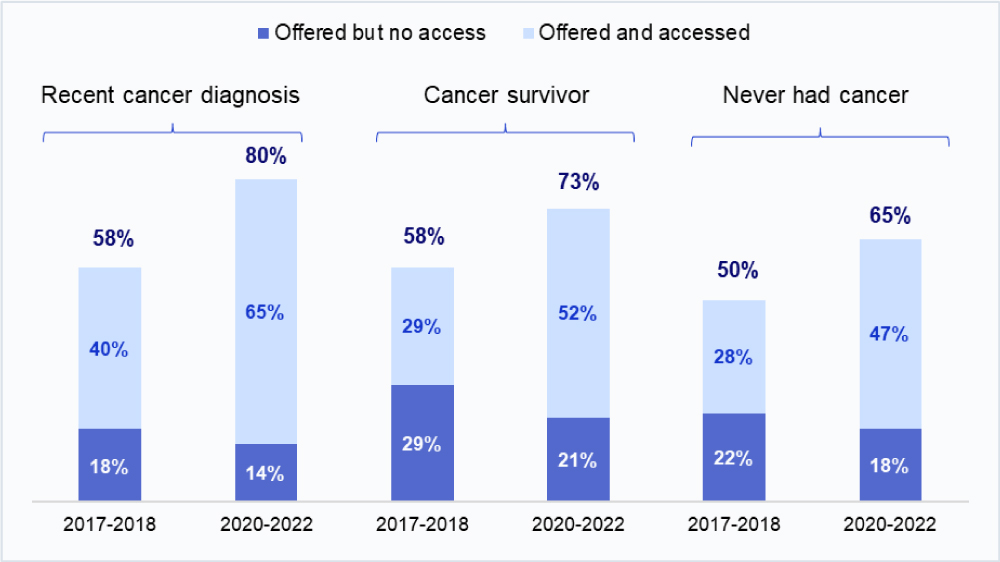
Notes: Denominator represents all individuals and percentages reflect weighted national estimates. Recent cancer diagnosis was defined as individuals who reported that their first cancer diagnosis occurred in the past 5 years. Cancer survivor was defined as individuals who reported that their first cancer diagnosis occurred more than five years ago. Never had cancer was defined as individuals who reported that they have never been diagnosed with cancer. *Indicates statistically significant difference from the “Never had cancer” group (p<0.05). Original source of 2017-2018 statistics: Access and Use of Electronic Health Information by Individuals with Cancer: 2017-2018 | HealthIT.gov.
Forty percent of individuals with a recent cancer diagnosis reported accessing their online medical records or patient portal 6 or more times in the past year.
Findings
- Individuals with a recent cancer diagnosis accessed their information more frequently: 40% of individuals with a recent cancer diagnosis accessed their online medical records 6 or more times in the past year (“frequent users”) – nearly twice the rate of those who have never had cancer (23%).
- Less than 1 in 5 cancer survivors and those with a cancer diagnosis (18%) reported accessing their online medical records 1 or 2 times in the past year (“infrequent users”) as compared to over a quarter (27%) of those who never had cancer.
Figure 2: Frequency of access within the past year among those offered a portal by cancer status, 2020-2022.
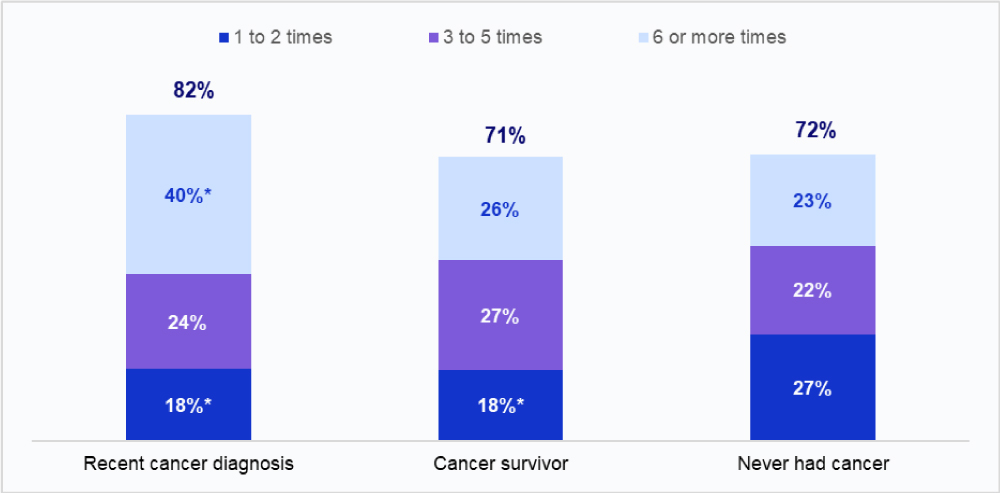
Notes: Denominator represents individuals who were offered a portal by their health care provider or insurer. *Indicates statistically significant difference from the “Never had cancer” group (p<0.05).
Frequent users and individuals with a recent cancer diagnosis had higher rates of using multiple methods to access their information electronically.
Findings
- In 2020-2022, individuals with a recent cancer diagnosis—who tend to be frequent users (Figure 2)—had higher rates of using multiple methods (both a smartphone-based health app and web-based portal) to access their online medical records (31%) (Panel A).
- While many individuals used only web-based methods to access their records, frequent users had higher rates of using multiple methods of access, regardless of cancer status (Panel B).
Figure 3: Methods individuals used to access their online medical records by cancer status and frequency of access, 2020-2022.
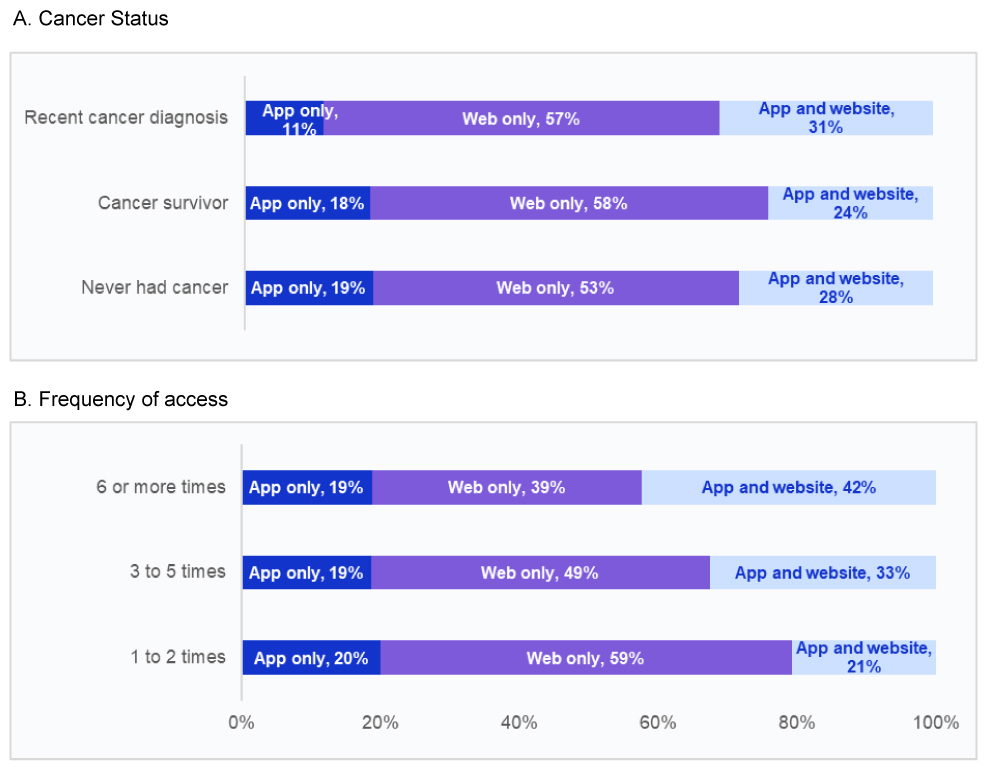
Notes: Denominator represents individuals who accessed their online medical records at least once within the past year. Don’t know responses to the methods of access question were excluded. *Indicates statistically significant difference from the “Never had cancer” (Panel A) or “6 or more times” (Panel B) reference group (p<0.05).
Nearly all users with a recent cancer diagnosis used their access to view test results.
Findings
- Viewing tests results and clinical notes were the most common uses of patient portals or online medical records among those who access them, regardless of cancer status.
- Cancer survivors and individuals with a recent cancer diagnosis used their online medical record or patient portal to view test results (93%) or clinical notes (77%) at higher rates than individuals who have never had cancer (88% and 68%, respectively).
- Rates of portal use for downloading health information or transmitting information to a 3rd party did not differ substantially by cancer status.
Figure 4: Individuals’ use of online medical records or patient portal to view, download, or transmit information by cancer status, 2020-2022.
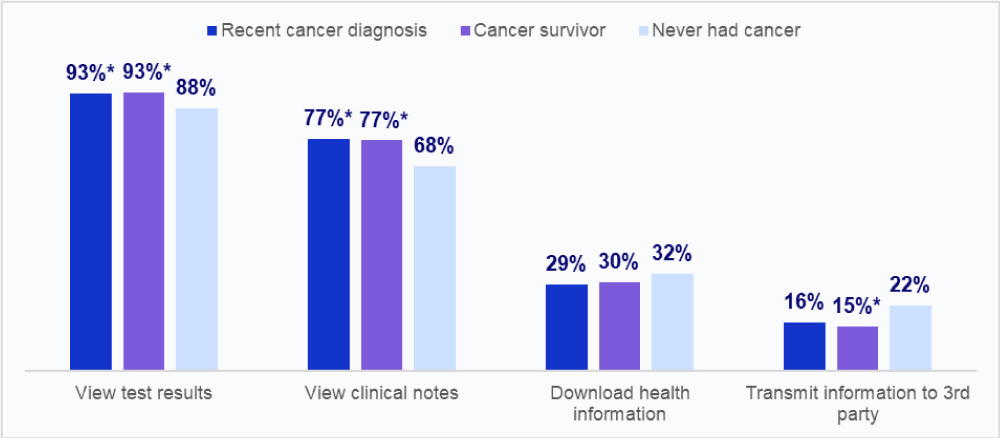
Notes: Denominator represents individuals who accessed their online medical records at least once within the past year. For ‘view clinical notes’ data come from two different questions. In 2020, the survey asks whether respondents’ online medical records include clinical notes (Yes vs. No or don’t know). In 2022, the survey asks whether respondents used their online medical record to view clinical notes (Yes vs. No). Missing values were excluded from the denominator. *Indicates statistically significant difference from the “Never had cancer” group (p<0.05).
More than half of individuals with a recent cancer diagnosis reported having multiple patient portals or online medical records.
Findings
- Individuals with a recent cancer diagnosis had significantly higher rates of having multiple online records or patient portals (59%, 2.2 portals on average) compared to cancer survivors (48%, 1.2 on average) and those who have never had cancer (43%, 1.7 on average)
- Individuals with a recent cancer diagnosis reported using a 3rd party app to organize information from multiple portals or online medical records at higher rates (8%) than cancer survivors (4%) and those who have never had cancer (5%).
- A greater share of individuals, regardless of cancer status, reported having a patient portal or online medical record through their primary care provider (63% nationally).
Table 1: Organization or provider types with which individuals have an online medical record or patient portal and use of 3rd party apps to organize information from multiple records or portals, 2022.
| Portal type (National estimates %) | Recent cancer diagnosis | Cancer survivor | Never had cancer |
|---|---|---|---|
| Have multiple portals (44%) | 59%* | 48% | 43% |
| Primary care (63%) | 75%* | 72%* | 61% |
| Other provider (e.g., specialist) (32%) | 51%* | 37% | 31% |
| Insurer (29%) | 35% | 25% | 29% |
| Clinical laboratory (26%) | 32% | 28% | 26% |
| Pharmacy (23%) | 26% | 20% | 24% |
| No portal (22%) | 12%* | 18% | 22% |
| Mean number of portals (1.73) | 2.20* | 1.82 | 1.7 |
| Use 3rd party app to organize info (5%) | 8% | 4% | 5% |
Notes: Denominator represents all individuals. National estimates reported in parentheses in Column 1. Questions were available in HINTS 6 (2022) only. Missing values excluded from the denominator. *Indicates statistically significant difference from the “Never had cancer” group (p<0.05).
Summary
Cancer is one of the most prevalent chronic diseases in the US. Nearly 40% of individuals will be diagnosed with cancer at some point during their lifetimes, (1) which speaks to the importance of ensuring individuals navigating a recent diagnosis or cancer survivorship have easy access to tools to navigate their care. In 2020 and 2022, more than three-quarters of cancer survivors (73%) and individuals with a recent cancer diagnosis (80%) were offered access to their online medical records or patient portal by a health care provider or insurer – a significant increase from 2017-2018. This increase likely reflects broader growth in patients being offered online access to their electronic health information during the COVID-19 pandemic—which likely spurred demand for online access to medical records including test results. This increased demand was supported by the implementation of the Cures Act Final Rule, which aimed to make it easier and more convenient for patients to access their electronic health information using smartphone- or web-based health apps (3-5).
In 2020-2022, most patients who were offered access to their online medical records or patient portal reported accessing them at least once in the past year. Rates of access were higher among individuals with a recent cancer diagnosis (82%) compared to cancer survivors (71%) and those who never had cancer (72%). Individuals with a recent diagnosis were also more frequent users: 40% accessed their online medical records or patient portal 6 or more times in the past year compared to about a quarter of cancer survivors (26%) and those who have never had cancer (23%). Frequent access among individuals with a recent diagnosis may be attributable to more frequent health care visits following a diagnosis. Having online access to medical records allows patients to view test results and clinical notes, communicate with providers, and download or share information with other members of the care team.
Patient portals and smartphone-based health apps, which help enable individuals manage information from multiple online medical records or patient portals, can help bridge the gap in cancer care by providing an electronic means of navigating care and facilitating patient-provider communication. Studies have shown that patient portal use is associated with greater perceived patient-centered communication among individuals with cancer and other chronic conditions (6, 7). Individuals with a recent cancer diagnosis—who tend to be frequent users—had higher rates of using multiple methods (both an app and a web-based portal) to access their information electronically. Individuals with a recent cancer diagnosis also had higher rates of having multiple online records or patient portals (59%, 2.2 portals on average)—particularly portals or records with other health care provider (e.g., specialists)—compared to cancer survivors (48%, 1.2 on average) and those who have never had cancer (43%, 1.7 on average).
One option available to individuals to share information across portals is to download or transmit their electronic health information. However, rates of downloading or transmitting information have been consistently low—even among those with a recent cancer diagnosis—suggesting there may be differences in availability, lack of awareness, or lower demand for these functionalities. Aggregating data from multiple records using 3rd party health apps is a more recently available option to manage information contained in different portals. Individuals with a recent cancer diagnosis reported using 3rd party health apps to organize information from multiple portals or online medical records at slightly higher rates (8%) than cancer survivors (4%) and those who have never had cancer (5%). Despite relatively low use of these portal organizing apps, this difference in use suggests greater utility for individuals with cancer or another chronic condition to streamline access to information contained in multiple records.
Ensuring patients and caregivers have easy access to information they need to manage their health and care is critical to enabling patients to navigate a recent cancer diagnosis or cancer survivorship. Targeted efforts to improve patient access and simplify patient navigation can help further promote patient-centered communication, empower patients to make informed decisions about their health and care, and aid the delivery of person-centered care. As part of the Cancer Moonshot initiative, the White House recently announced CancerX—a multi-stakeholder public-private partnership aimed at developing innovative approaches to reduce the burden of cancer, including by focusing on ways to leverage existing technology and advancing the development and commercialization of new digital tools to enhance patient access and ease the burden of cancer navigation. One such initiative that aligns with the Cancer Moonshot priorities is the Centers for Medicare & Medicaid Services’ Enhancing Oncology Model (EOM), an innovative payment model that aims to improve health care providers’ ability to deliver patient-centered care, enhance coordination across all of a patients’ health care providers, and support personalized services that help patients navigate and manage their care.
In addition to ongoing efforts to promote enhance patient navigation, there are parallel efforts aimed at increasing the standardized capture of data elements that will assist patients, providers, researchers, and public health practitioners in gaining access to the information needed to further cancer prevention, diagnosis, research and care. The USCDI+ Cancer Initiative—a collaboration between the National Cancer Institute and the Office of the Assistant Secretary for Technology Policy—aims to support the adoption and use of interoperable cancer health IT standards and advance the development and adoption of cancer-specific use cases (e.g., clinical trial matching; timeliness of cancer registry reporting) to more broadly support the cancer community. Furthermore, in alignment with The White House’s call to action regarding improving cancer care through better electronic health records (EHRs), CancerX is working closely with partners, members, and healthcare technology companies to contribute input to the development of and ultimately support broad industry adoption of USCDI+ Cancer to improve the usability and accessibility of cancer data to benefit patient care everywhere.
Reducing the burden of cancer is a national priority. Several federal efforts are underway to advance cancer-focused research, reduce the burden of navigating cancer care, and enhance patient access. Patient portals and apps can help patients navigate cancer by enabling easy, secure access to information needed to manage their health and care. Looking forward, it will be important to ensure that emerging tools and technologies are widely accessible to patients and navigators in various stages of navigating cancer survivorship or a recent diagnosis.
Data Sources and Methods
Data come from two waves of the National Cancer Institute’s (NCI) Health Information National Trends Survey (HINTS). Since 2003, NCI has conducted the HINTS to assess the impacts of health communication, specifically measuring: how people access and use health information, how people use information technology to manage their health and health information, and the degree to which people are engaged in health behaviors. The Office of the Assistant Secretary for Technology Policy (ASTP) works with NCI to develop survey content related to individuals’ access and use of information contained in their online medical records.
This brief pooled data from HINTS 5, Cycle 4 (2020) and HINTS 6 (2022) to achieve a more robust sample of individuals with a recent or prior cancer diagnosis. HINTS 5, Cycle 4 was a single-mode mail survey fielded February through June 2020. HINTS 6 (2022) was fielded as both a paper and web-based survey in March through November 2022. The sample design for each survey consisted of two-stages. In the first stage, a stratified sample of addresses were selected from a file of residential addresses. In the second-stage, one adult was selected within each sampled household. The sampling frame consisted of a database of addresses used by Marketing Systems Group (MSG) to provide a random sample of addresses. For HINTS 5, Cycle 4, complete data were collected from 3,865 respondents and the final response rate was 37%. For HINTS 6, complete data were collected from 6,252 respondents and the final response rate was 28%. All results were weighted to account for non-response and generate national estimates. More details regarding sample selection, data collection, and weighting can be found in the Methodology Reports on the HINTS website.
References
- National Cancer Institute. Cancer Statistics [Internet]. Bethesda (MD): National Cancer Institute. Available from: https://www.cancer.gov/about-cancer/understanding/statistics.
- The White House. WHAT THEY ARE SAYING: As Part of the Cancer Moonshot, First Lady Jill Biden, Leading Health Insurers & Oncology Practices Nationwide Highlight New Actions to Expand Patient Navigation [Internet]. Washington (DC): The White House. Available from: https://bidenwhitehouse.archives.gov/briefing-room/statements-releases/2024/03/27/what-they-are-saying-as-part-of-the-cancer-moonshot-first-lady-jill-biden-leading-health-insurers-oncology-practices-nationwide-highlight-new-actions-to-expand-patient-navigation/.
- Strawley C. and Richwine C. Individuals’ Access and Use of Patient Portals and Smartphone Health Apps, 2022. Office of the Assistant Secretary for Technology Policy and Office of the National Coordinator for Health Information Technology. Data Brief: 69. 2023. Available from: Individuals’ Access and Use of Patient Portals and Smartphone Health Apps, 2022 | HealthIT.gov.
- Richwine, C. Progress and Persistent Disparities in Patient Access to Electronic Health Information. JAMA Health Forum. 2023;4(11). Available from: Progress and Persistent Disparities in Patient Access to Electronic Health Information | Health Policy | JAMA Health Forum | JAMA Network.
- Office of the Assistant Secretary for Technology Policy. The ONC Cures Act Final Rule: Delivering on the Patient’s Right to Their Medical Records and Promoting a Modern Health App Economy [Internet]. Washington (DC): Office of the Assistant Secretary for Technology Policy. Available from: TheONCCuresActFinalRule.pdf (healthit.gov)
- Zaidi M, Amante DJ, Anderson E, Ito Fukunaga M, Faro JM, Frisard C, Sadasivam RS, Lemon SC. Association Between Patient Portal Use and Perceived Patient-Centered Communication Among Adults With Cancer: Cross-sectional Survey Study. JMIR Cancer. 2022 Aug 9;8(3). Available from: Association Between Patient Portal Use and Perceived Patient-Centered Communication Among Adults With Cancer: Cross-sectional Survey Study – PMC (nih.gov)
- Stewart MT, Hogan TP, Nicklas J, Robinson SA, Purington CM, Miller CJ, Vimalananda VG, Connolly SL, Wolfe HL, Nazi KM, Netherton D, Shimada SL. The Promise of Patient Portals for Individuals Living With Chronic Illness: Qualitative Study Identifying Pathways of Patient Engagement. J Med Internet Res 2020;22(7). Available from: Journal of Medical Internet Research – The Promise of Patient Portals for Individuals Living With Chronic Illness: Qualitative Study Identifying Pathways of Patient Engagement (jmir.org).
Acknowledgements
The authors are with the Office of Standards, Certification, and Analysis, within the Office of the Assistant Secretary for Technology Policy (ASTP). The data brief was drafted under the direction of Mera Choi, Director of the Technical Strategy and Analysis Division, Vaishali Patel, Deputy Director of the Technical Strategy and Analysis Division, and Wesley Barker, Chief of the Data Analysis Branch.
Suggested Citation
Richwine C. Access and Use of Electronic Health Information by Individuals with Cancer: 2020-2022. Office of the Assistant Secretary for Technology Policy. Data Brief: 73. September 2024.