

Official websites use .gov
A
.gov
website belongs to an official government organization in the
United States.

Secure .gov websites use HTTPS
A
lock
(
) or
https://
means you’ve safely connected to the .gov website. Share sensitive
information only on official, secure websites.

 Data Briefs
Individuals’ Access and Use of Patient Portals and Smartphone Health Apps, 2024
No. 77 | July 2025

Empowering patients by improving secure, convenient access to their health records remains a top federal priority. In 2020, the Office of the Assistant Secretary for Technology Policy (ASTP) / Office of the National Coordinator for Health IT (ASTP/ONC) published the Cures Act Final Rule which aimed to increase the access and exchange of electronic health information among patients, caregivers, and providers. The Cures Rule called on health IT developers to adopt secure, standards-based application programming interfaces (APIs) that make it easier for patients to access and manage their health information using a smartphone health app of their choice1. Ready, on-demand access to online medical records via patient portals or smartphone-based health apps is particularly critical for those managing a chronic condition or a recent cancer diagnosis, and for those providing care or making medical decisions for another person2. The use of apps can also increase transparency around care quality and costs and better enable individuals to make informed decisions about their health and care3. This brief uses the latest data from the 2024 Health Information National Trends Survey (HINTS) to assess progress in patient and caregiver access following implementation of Cures Rule provisions and describe recent trends in individuals’ access and use of online medical records and patient portals.
Highlights
- In 2024, 65% of individuals nationally and 75% of those managing a recent cancer diagnosis were offered and accessed their online medical records or patient portal.
- Proxy or caregiver access to patient portals more than doubled between 2020 and 2024.
- Individuals encouraged by their health care provider to use their patient portal accessed and used their portal at higher rates compared to those not encouraged.
- App-based access to online medical records increased from 38% in 2020 to 57% in 2024.
- While more than half of individuals nationally (59%) had multiple online medical records or patient portals in 2024, only 7% reported using a portal organizing app to combine medical information from different portals or online medical records into one place.
Nearly two-thirds of individuals nationally were offered and accessed their online medical record or patient portal in 2024.
Findings
- In 2024, more than 3 in 4 individuals nationwide reported being offered online access to their medical records by their health care provider (HCP) or insurer.
- The share of individuals who were offered and accessed their online medical record or patient portal has more than doubled in the past decade (from 25% in 2014 to 65% in 2024).
- The share of individuals who accessed the online medical record or patient portal of a person for whom they are providing care or making health care decisions—referred to as “proxy access” or “caregiver access”—more than doubled between 2020 and 2024 (from 24% to 51%).
Figure 1: Percent of individuals nationwide who were offered and accessed a patient portal, 2014-2024.
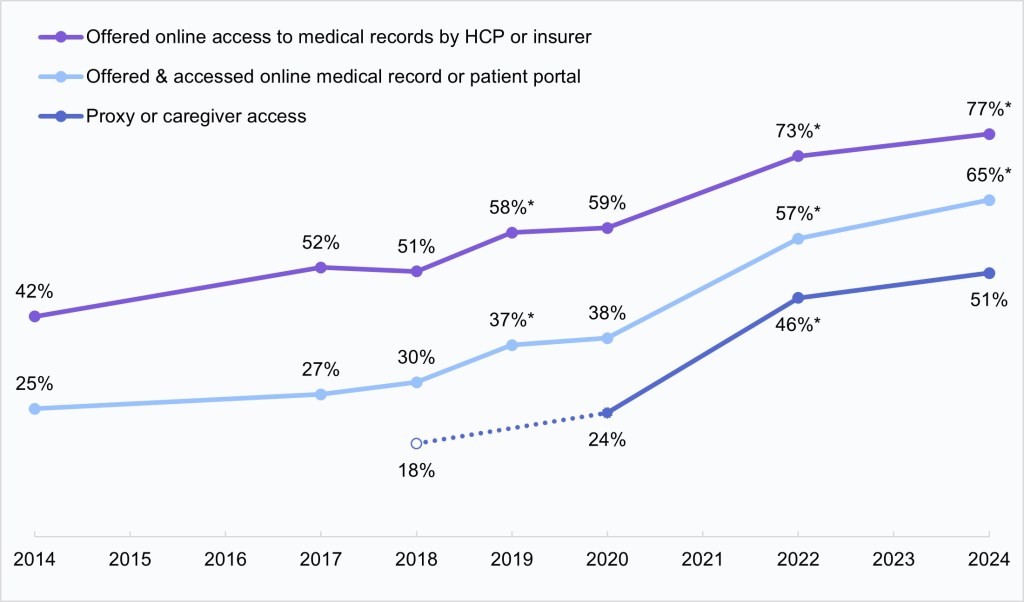
Notes: “Offered online access to medical records by HCP or insurer” indicates the share of individuals who reported being offered online access to their medical records (e.g., a patient portal) by a health care provider (HCP) or insurer. “Accessed patient portal” indicates the share of individuals who were offered and accessed their patient portal at least once in the past year. “Proxy or caregiver access” indicates the share of individuals who accessed the patient portal or online medical record of a person for whom they are providing care or making health care decisions at least once in the past year. Prior to 2020, the question about caregiver access did not provide the response option, “Care recipient does not have an online medical record.” Thus, earlier estimates may not be directly comparable to 2020-2024 estimates. *Indicates statistically significant difference from previous year (p<0.05).
Individuals managing a chronic condition or recent cancer diagnosis were offered and accessed their online medical records at higher rates than the national average.
Findings
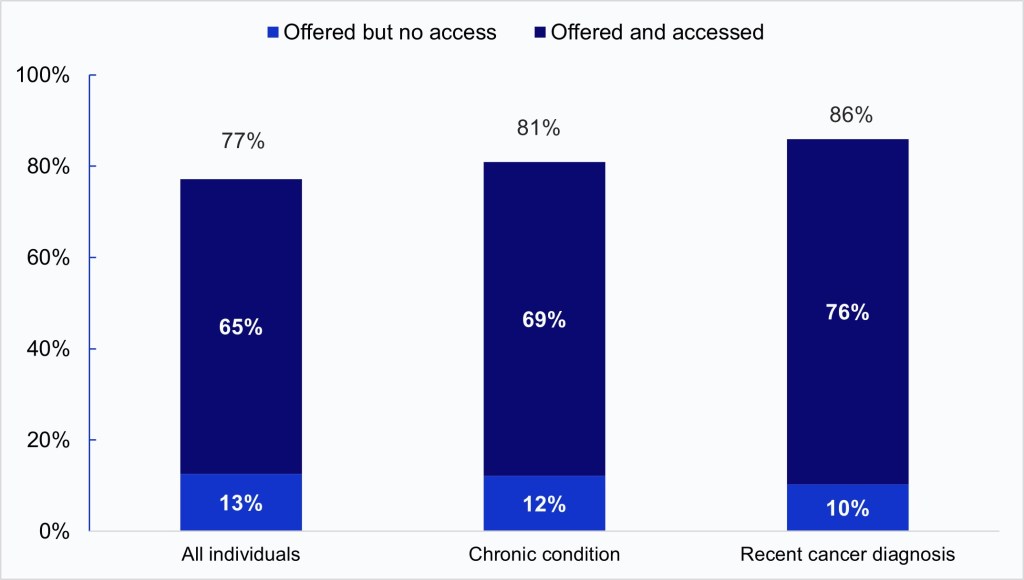
- In 2024, 81% of individuals with a chronic condition were offered online access to their medical records and 69% accessed their records at least once in that past year.
- Eighty-six percent (86%) of individuals managing a recent cancer diagnosis were offered online access to their medical records and more than three-quarters (76%) accessed their records at least once in the past year.
Figure 2: Percent of individuals who were offered access to their online medical records or patient portal by those managing a chronic condition or recent cancer diagnosis, 2024
Individuals encouraged by their HCP to use their patient portal accessed and used their portal at higher rates compared to those not encouraged.
Findings
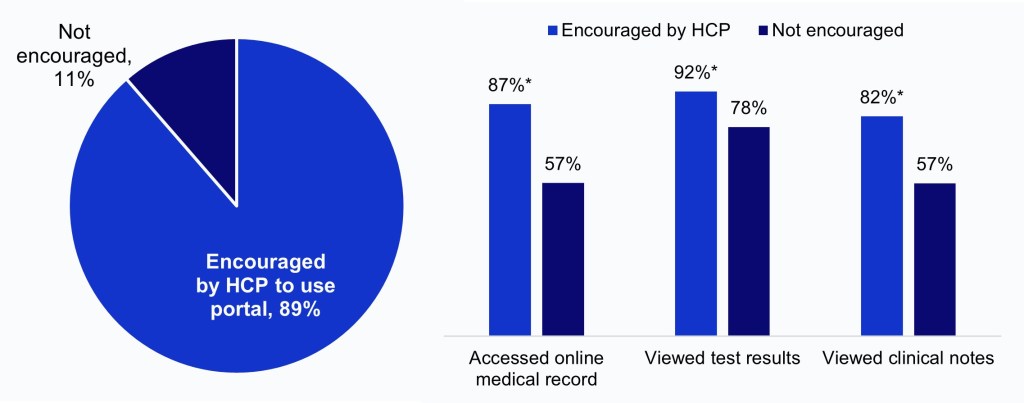
- In 2024, nearly all individuals who were offered online access to their medical records reported being encouraged by their HCP to use their patient portal (89%).
- Eighty-seven percent (87%) of individuals encouraged by their HCP accessed their patient portal at least once in the past year compared to just 57% of those not encouraged.
- Individuals encouraged by their HCP to use their patient portal viewed test results and clinical notes at higher rates compared to those not encouraged (92% vs. 78% and 82% vs. 57%, respectively).
Figure 3: Percent of individuals encouraged by their health care provider to use their patient portal and rate of individuals accessing and using their patient portal by whether their health care provider encouraged them, 2024.
App-based access to online medical records continues to rise in 2024.
Findings
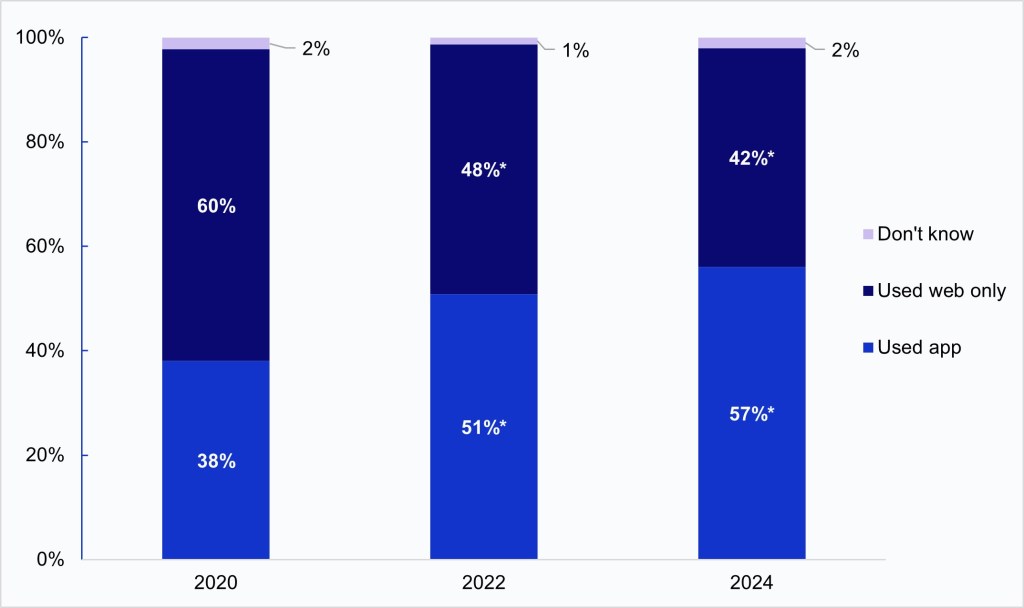
- In 2024, 57% of individuals reported using an app to access their records, a significant increase from 51% in 2022 and 38% in 2020.
- The share of individuals using only web-based methods to access their online medical records or patient portal has been on the decline, decreasing from 60% in 2020 to 48% in 2022, and 42% in 2024.
Figure 4: Individuals’ use of apps to access their online medical records, 2024.
More than half of individuals nationally (59%) had multiple online medical records or patient portals in 2024.
Findings
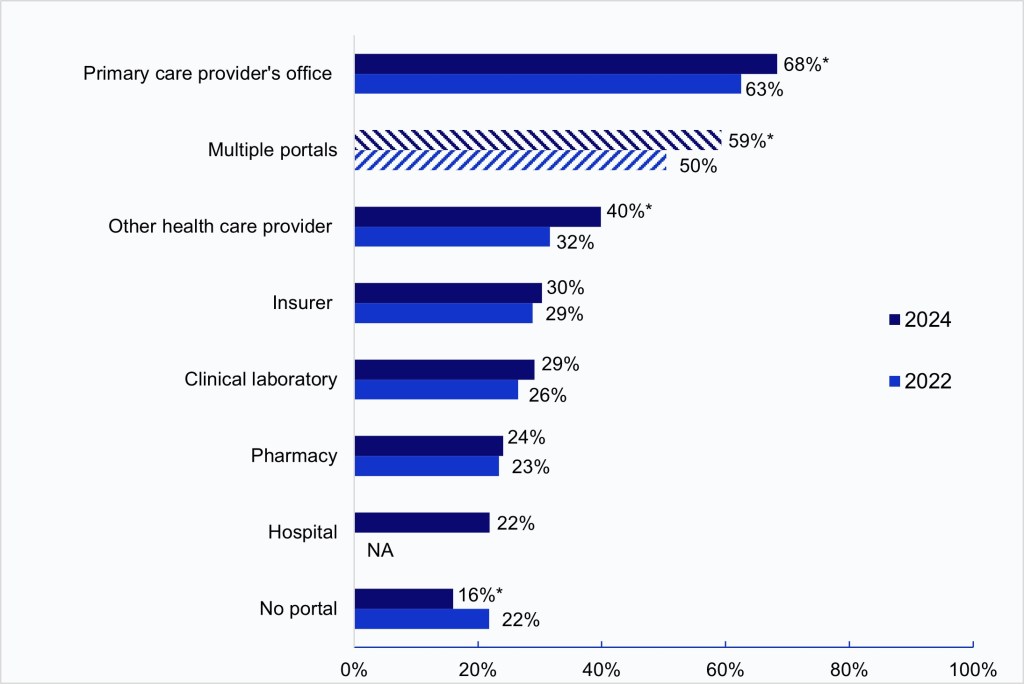
- While most individuals had an online medical record or patient portal through their primary care provider’s office (68%), individuals also reported having an online medical record or patient portal with another health care provider (40%), insurer (30%), or clinical laboratory (29%).
- Less frequently, individuals reported having an online medical record or patient portal with their pharmacy (24%) or a hospital (22%).
- Only 16% of individuals reported they did not have any online medical records or patient portals in 2024.
Figure 5: Organizations/providers with which individuals have an online medical record or patient portal, 2024.
Less than 1 in 10 individuals used an app to combine medical information from different patient portals or online medical records in 2024.
Findings
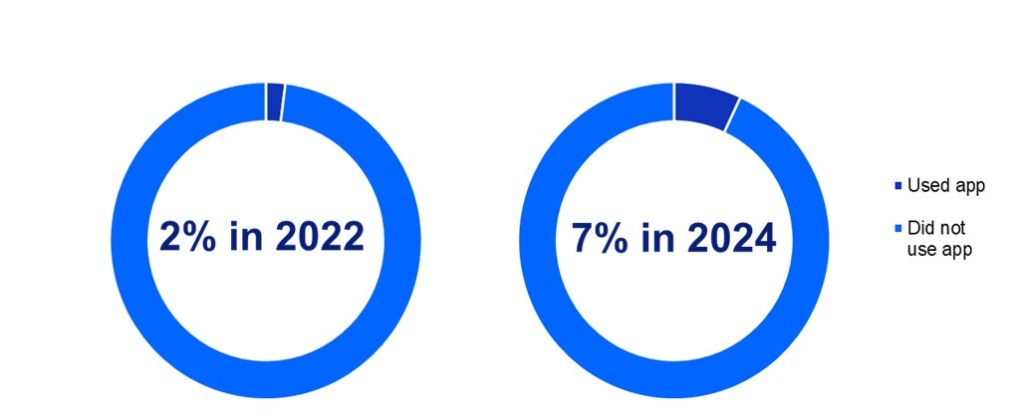
- While only 7% of individuals used a portal organizing app (e.g., Apple Health Records or CommonHealth) to combine medical information from different patient portals or online medical records in 2024, this represents a significant increase from 2% in 2022.
- Use of portal organizing apps was similar among individuals who reported having multiple online medical records or patient portals (5% in 2022, 7% in 2024) (Appendix Table 1).
Figure 6: Individuals’ use of portal organizing apps to combine medical information from different patient portals or online medical records into one place, 2022-2024
Summary
Following implementation of ASTP/ONC Cures Act Final Rule requirements, and in the wake of the COVID-19 pandemic which likely spurred demand for virtual care and online access to medical records, the latest data from the 2024 HINTS indicates that patient access is still on the rise. In 2024, more than 3 in 4 individuals nationwide reported being offered online access to their medical records by their health care provider (HCP) or insurer and nearly two-thirds of individuals accessed their records at least once in the past year—a significant increase from 2022 levels. Proxy and caregiver access is also on the rise, more than doubling from 24% in 2020 to 51% in 2024. Rates of access were even higher among individuals managing a chronic condition or recent cancer diagnosis, who may have more frequent interactions with the health care system and utilize patient portals to view test results and clinical notes, message with providers, or share information with caregivers or members of their care team4, 5. In 2024, more than two-thirds of individuals with a chronic condition (67%) and more than three-quarters of individuals with a recent cancer diagnosis (76%) accessed their patient portal or online medical records in the past year compared to 65% of individuals nationally.
Steep upward trends in patient access after 2020 may provide early evidence of the effectiveness of targeted efforts to make it easier for patients to manage their health information electronically. It may also reflect greater engagement from providers: nearly all individuals who were offered online access to their medical records reported being encouraged by their HCP to use their patient portal in 2024 (89%)—a notable increase from 79% in 20206. Consistent with prior work7, our findings indicate that individuals who were encouraged by their HCP had significantly higher rates of portal access and use compared to those not encouraged, which speaks to the importance of patient-provider communication in facilitating patient access and use.
ASTP/ONC’s Cures Act Final Rule aimed to increase patient access by making it easy for patients to access and manage their records using an app of their choice. Data from the last 3 waves of the HINTS indicate that app-based access to online medical records has been on the rise since implementation of the Cures Act Final Rule provisions, increasing from 38% in 2020 to 51% in 2022 and 57% in 2024. With the increased prevalence of online tools to enhance patient access, individuals also increasingly report having multiple online medical records or patient portals with different organizations and providers. In 2024, more than half of individuals nationally (59%) had multiple online medical records or portals, up from 50% in 20248. While primary care provider portals remain the most common (68%), many individuals report having records with other health care providers, insurers, labs, pharmacies, and hospitals. Despite the relatively high share of individuals who report having multiple records, less than 1 in 10 individuals used a third-party portal organizing app (e.g., Apple Health Records) to combine information from different records in one place. More work is needed to understand whether low rates are due to a lack of awareness or low demand, as prior work has shown patients overwhelmingly utilize patient portal apps from EHR developers (e.g., Epic’s MyChart), health care organizations, and insurers9.
Patient portals and apps that enable patient access are important tools that put patients and caregivers in control of decisions regarding their health and care. To maximize the benefits of efforts aimed at enhancing patient access, it will be important to continue to educate both patients and providers on the availability of tools and resources to manage and share their health information and best practices for making these tools and technologies widely offered and accessible for all individuals.
Patient Access Resources
Patient Access Information for Individuals
The Guide to Getting & Using Your Health Records
Patient Access Information for Providers
Patient Access Information for EHR Developers
Data Sources and Methods
Data come from the National Cancer Institute’s (NCI) Health Information National Trends Survey (HINTS). Since 2003, NCI has conducted the HINTS to assess the impacts of health communication, specifically measuring: how people access and use health information, how people use information technology to manage their health and health information, and the degree to which people are engaged in health behaviors. The Office of the Assistant Secretary for Technology Policy (ASTP) works with NCI to develop survey content related to individuals’ access and use of information contained in their online medical records.
HINTS 7 was fielded as both a paper and web-based survey in March through September 2024. The sample design consisted of two-stages. In the first stage, a stratified sample of addresses was selected from a file of residential addresses. In the second-stage, one adult was selected within each sampled household. The sampling frame consisted of a database of addresses used by Marketing Systems Group (MSG) to provide a random sample of addresses. Complete data were collected from 7,278 respondents. The final overall response rate was 27.31%. All results were weighted to account for non-response and generate national estimates. More details regarding sample selection, data collection, and weighting can be found in the Methodology Reports on the HINTS website.
Data Availability
HINTS data are available for download from the National Cancer Institute: Health Information National Trends Survey | HINTS. If you have questions or would like to learn more about the data source or these findings, you may contact ASTP_Data@hhs.gov.
References
- United States of America. H.R. 34 – 21st Century Cures Act. [Internet]. Washington D.C.: Congress.gov; 2016 [2023 Apr 17]. Available from: https://www.congress.gov/bill/114th-congress/house-bill/34.
- Zaidi M, Amante DJ, Anderson E, Ito Fukunaga M, Faro JM, Frisard C, Sadasivam RS, Lemon SC. Association Between Patient Portal Use and Perceived Patient-Centered Communication Among Adults With Cancer: Cross-sectional Survey Study. JMIR Cancer. 2022 Aug 9;8(3). Available from: https://pmc.ncbi.nlm.nih.gov/articles/PMC9399875/#ref17.
- Office of the Assistant Secretary for Technology Policy. The ONC Cures Act Final Rule: Delivering on the Patient’s Right to Their Medical Records and Promoting a Modern Health App Economy [Internet]. Washington (DC): Office of the Assistant Secretary for Technology Policy. Available from: https://beta.healthit.gov/wp-content/uploads/2020/03/TheONCCuresActFinalRule.pdf
- Griffin JM, Kroner BL, Wong SL, Preiss L, Smith AW, Cheville AL, et al. Disparities in electronic health record portal access and use among patients with cancer. J Natl Cancer Inst. 2024 Mar;116(3):476–84. Available from: https://academic.oup.com/jnci/article/116/3/476/7335843
- Richwine C. Access and Use of Electronic Health Information by Individuals with Cancer: 2020-2022. Office of the Assistant Secretary for Technology Policy. Data Brief: 73. September 2024. Available from: https://www.healthit.gov/data/data-briefs/access-and-use-electronic-health-information-individuals-cancer-2020-2022
- Johnson C, Richwine C, & Patel V. Individuals’ Access and Use of Patient Portals and Smartphone Health Apps, 2020. Office of the Assistant Secretary for Technology Policy. Data Brief: 57. September 2021. Available from: https://www.healthit.gov/data/data-briefs/individuals-access-and-use-patient-portals-and-smartphone-health-apps-2020
- Richwine C, Johnson C, Patel V. Disparities in patient portal access and the role of providers in encouraging access and use. Journal of the American Medical Informatics Association. 2023; 30(2); 308-317. Available from: https://academic.oup.com/jamia/article-abstract/30/2/308/6855146?redirectedFrom=fulltext
- Strawley C. and Richwine C. Individuals’ Access and Use of Patient Portals and Smartphone Health Apps, 2022. Office of the Assistant Secretary for Technology Policy. Data Brief: 69. October 2023. Available from: https://www.healthit.gov/data/data-briefs/individuals-access-and-use-patient-portals-and-smartphone-health-apps-2022.
- Barker W, Richwine C. Patient Usage of Apps to Access Online Medical Records. JAMA Network Open. 2023;6(11):. Available from: https://jamanetwork.com/journals/jamanetworkopen/fullarticle/2811823
Acknowledgements
The authors are with the Office of Standards, Certification, and Analysis, within the Office of the Assistant Secretary for Technology Policy (ASTP). The data brief was drafted under the direction of Mera Choi, Director of the Technical Strategy and Analysis Division, Vaishali Patel, Deputy Director of the Technical Strategy and Analysis Division, and Wesley Barker, Chief of the Data Analysis Branch.
Suggested Citation
Richwine C. Individuals’ Access and Use of Patient Portals and Smartphone Health Apps, 2024. Office of the Assistant Secretary for Technology Policy. Data Brief: 77. June 2025.
Appendix
Appendix Table 1: Individuals’ use of portal organizing apps to combine medical information from different patient portals or online medical records into one place, 2022-2024
| All individuals | Multiple portals | |||
|---|---|---|---|---|
| 2022 | 2024 | 2022 | 2024 | |
| Used app | 2% | 7%* | 5% | 7% |
| Did not use app | 98% | 93% | 95% | 93% |
Notes: Denominator excludes missing and invalid responses. In the first column, “Did not use app” also includes individuals who reported only having one online medical record or patient portal. *Indicates statistically significant difference from previous year (p<0.05).